

Why you had 17 minutes to escape a burning home 40 years ago — and only 3–4 minutes today?
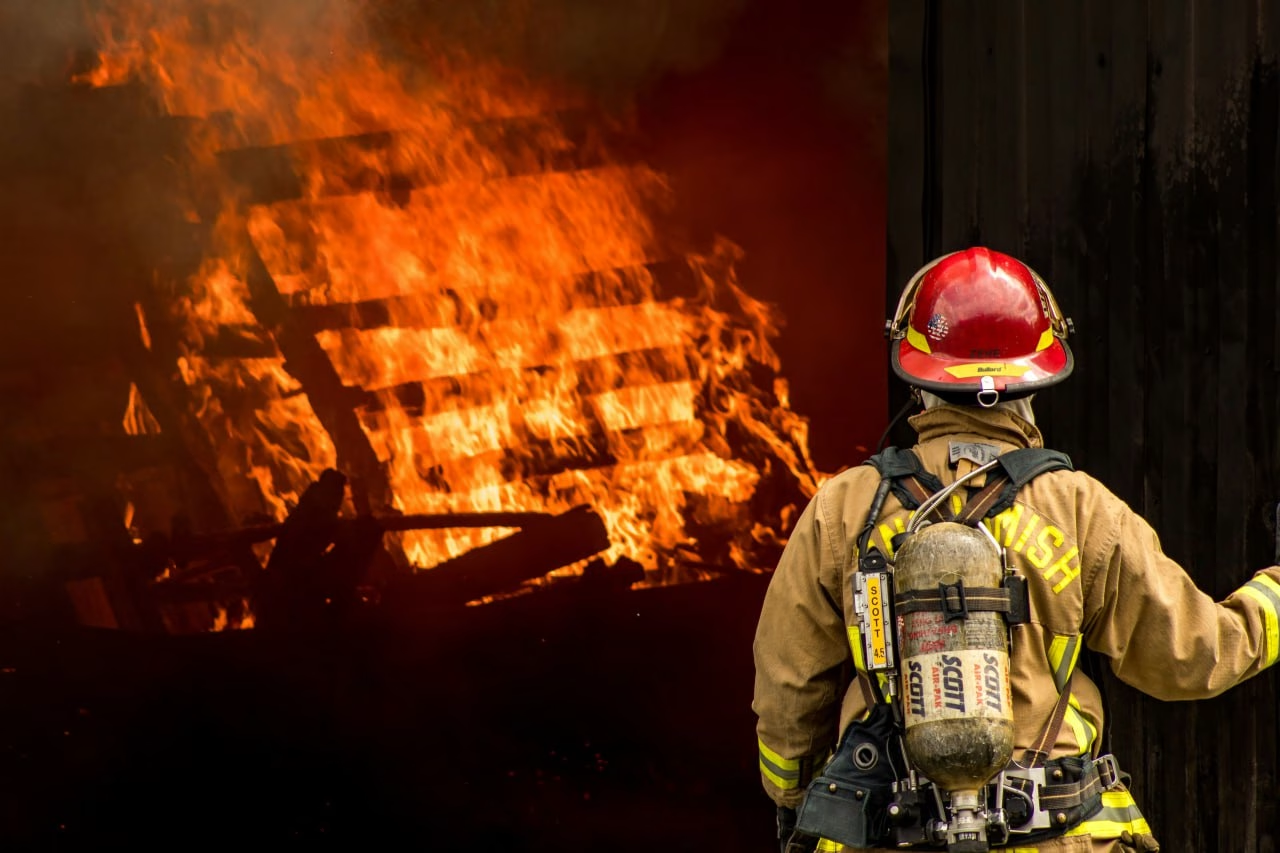
Four decades ago, the average family had up to 17 minutes to safely escape a house fire.
Today, most homes give you only 3–4 minutes.
This dramatic change is a direct result of how modern homes are built and furnished. Fire behavior has evolved because our materials have changed.
1. Modern furniture burns faster
Today’s sofas, mattresses, carpets, and insulation are packed with synthetic foams, plastics, and petroleum-based fabrics.
These materials ignite quickly and burn extremely hot, producing toxic smoke in seconds.
2. Homes are built with more combustible materials
Forty years ago, homes were often constructed from brick, concrete, and denser solid wood, which burn slowly and resist structural collapse.
Modern homes, however, rely heavily on:
Lightweight wooden frames
Engineered lumber and OSB
Thin wall assemblies
Synthetic building materials
These components are cheaper, but they fail faster in fire. Lightweight structural wood can lose its load-bearing strength in just a few minutes.
3. Open floor plans spread fire rapidly
Contemporary home layouts emphasize open spaces without doors or compartmentalization. This allows heat and smoke to move instantly throughout the house, accelerating the progression of the fire.
4. More electronics, more ignition sources
Modern homes contain dozens of electronic devices, chargers, lithium-ion batteries, and appliances that can overheat or malfunction, creating additional fire risks.
Homes today are more flammable, burn hotter, and collapse faster.
If a fire starts, you have less time than ever to get out safely.
This is why fire-resistant construction materials, such as steel framing and non-combustible ECOLIT foam concrete panels, are no longer optional. They are essential for protecting families and communities in an era where every second counts.