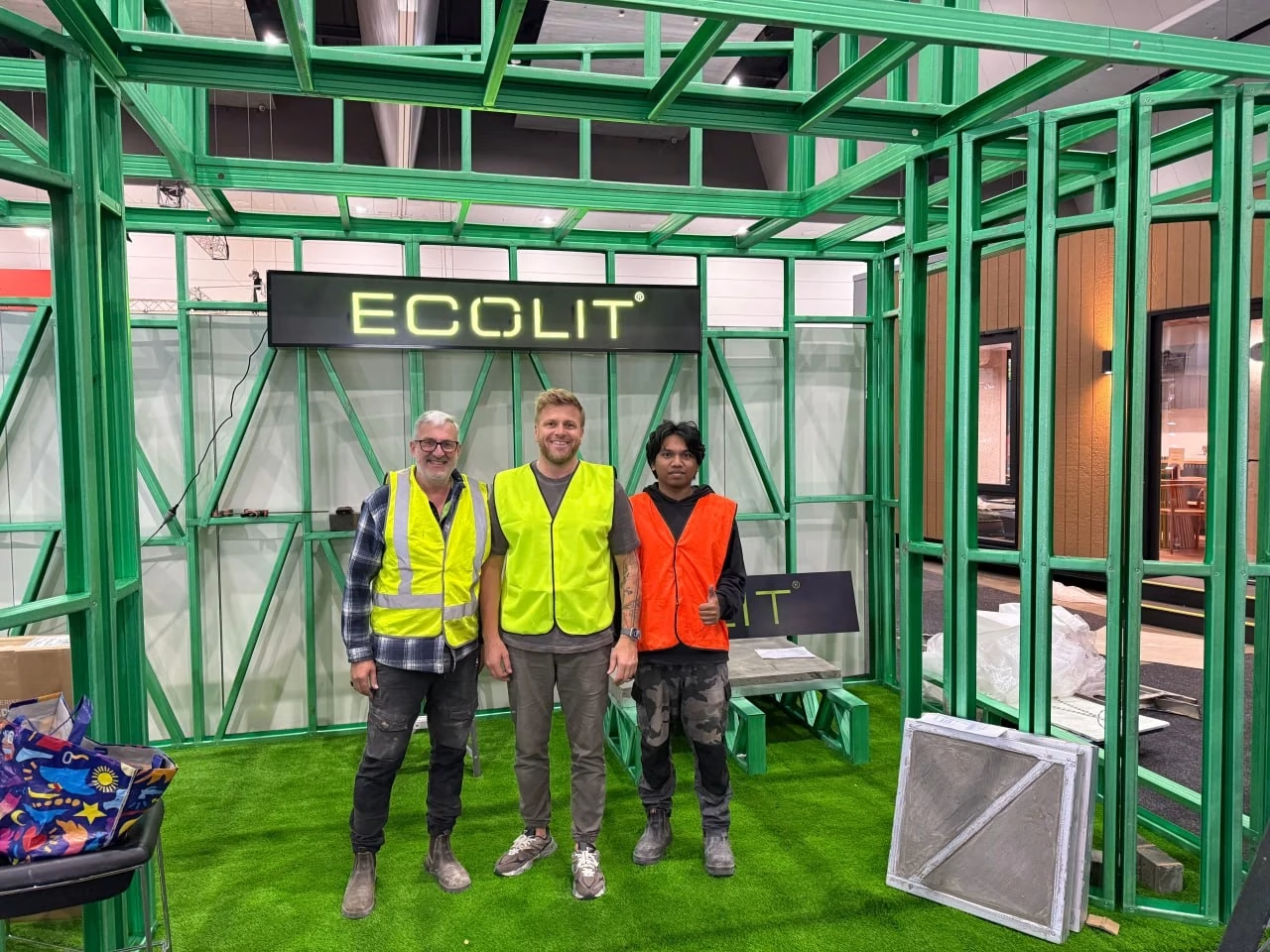

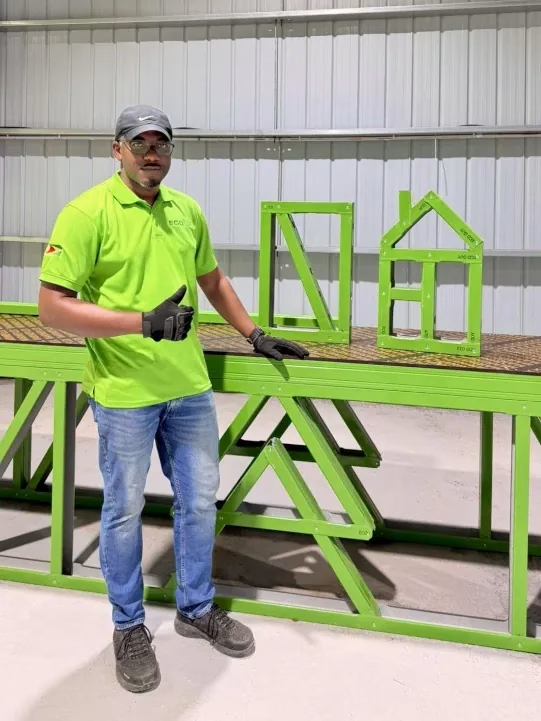
We’re excited to share an important milestone in ECOLIT’s journey: the launch of ECOLIT Guyana, our new branch in one of the most dynamic emerging markets in the world.
A new chapter
With the opening of ECOLIT Guyana, our construction system officially enters the South American market — a region where demand for modern, efficient, and sustainable building solutions is accelerating like almost nowhere else on the planet.
Guyana is currently undergoing a remarkable transformation. Rapid economic growth, a fast-expanding population center, and an unprecedented wave of investment in housing, infrastructure, and commercial real estate are reshaping the country at a pace few markets can match. For a construction system built around speed, quality, and sustainability, it’s exactly the right place to be — and exactly the right time.
Why Guyana
For us, this is more than geographic expansion. It’s a strategic step into a market where the ECOLIT philosophy — system-based construction that’s faster, cleaner, and more reliable than traditional methods — can make a tangible difference.
The need for high-quality housing and modern buildings in Guyana is enormous, and conventional construction alone won’t be able to keep up. That’s where ECOLIT comes in.
What’s next
We’ll be sharing more in the coming weeks and months — including details on our local team, first projects, partnerships, and the specific solutions we’re bringing to the Guyanese market.
For now: ECOLIT Guyana is officially live, and we couldn’t be more excited about what’s ahead.
Stay tuned — and as always, you can follow our journey at ecolit.tech.
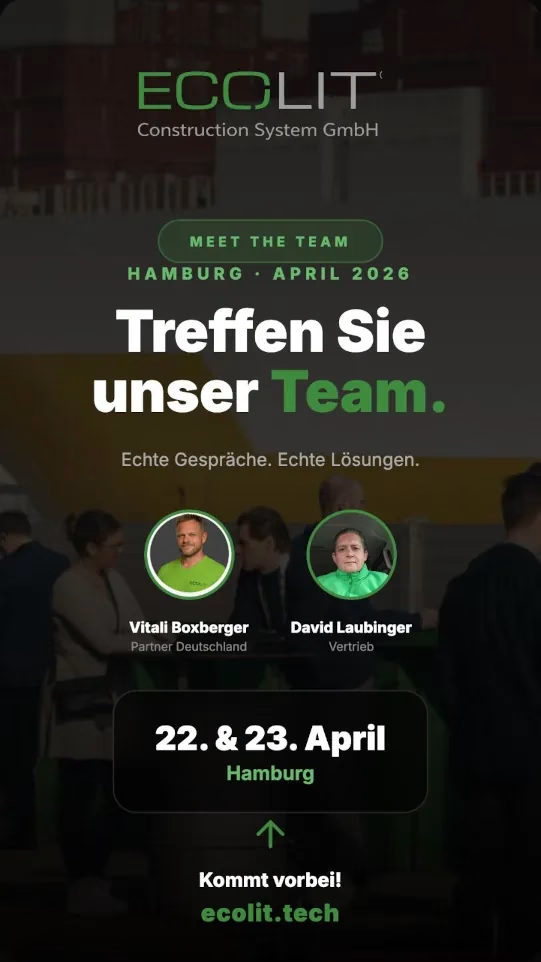
22–23 April 2026 – Hamburg.
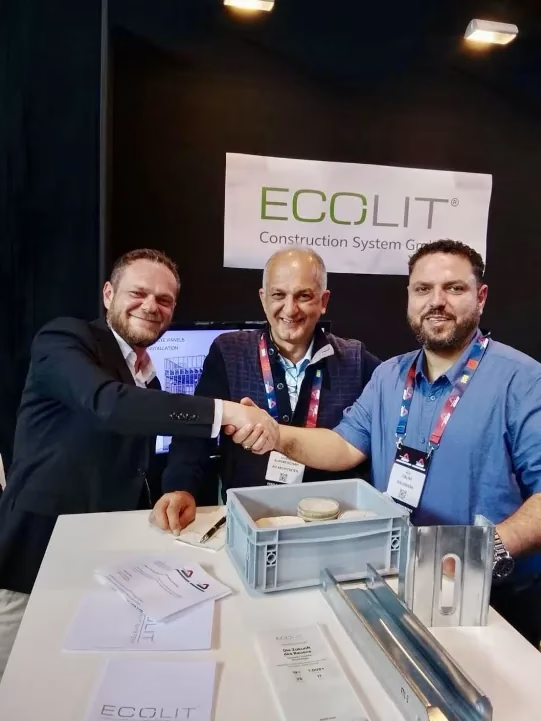
ECOLIT Construction System GmbH was on the ground at this year’s Construction Summit & PropTech Summit in Hamburg — two intense days at one of the most important meeting points for the future of building and real estate in Germany.
And it was worth every minute.
Two days of real conversations
Hamburg brought together architects, developers, investors, technology providers, and decision-makers from across the industry — and the energy on the floor reflected where construction is heading: faster, smarter, more sustainable, and far more open to system-based thinking than even a year ago.
At our stand, we had the chance to walk visitors through the ECOLIT construction system, talk through real project scenarios, and dig into the questions that matter – efficiency, design freedom, sustainability, and how to actually deliver modern buildings on time and on budget. No scripted demos, no sales pitch – just honest, technical, often very detailed conversations with people who know their craft.
The team on site
Representing ECOLIT in Hamburg:
Vitali Boxberger — Partner Germany
David Laubinger — Sales
Both spent the two days in back-to-back meetings with visitors at the stand, and came away with a long list of follow-ups, ideas, and new partnerships to develop.
Thank you
A sincere thank-you to everyone who stopped by, asked the hard questions, and shared their projects with us. The conversations we started in Hamburg are exactly the kind we came for — and many of them are already moving into the next phase.
If we met at the summit and you’re waiting on a follow-up, it’s on its way. If we missed each other, or you’d like to pick up the thread later, you can always reach us via ecolit.tech.
What’s next
Hamburg confirmed what we already suspected: the appetite for a serious, system-based approach to construction is growing fast. We’ll be sharing more in the coming weeks — new projects, new partnerships, and a few announcements we’re holding back for the right moment.
Stay tuned.

His story starts long before “construction tech” became a buzzword. Denis trained in the Emergency Ministry, where decisions are fast, stakes are real, and “safety” isn’t a slide in a deck. In 2008, he stepped into the family business in dry construction systems, then kept going until it turned into something bigger: a mission to rebuild the rules of housing itself.
Denis leads with a simple belief: housing should be safe, sustainable, and actually affordable. Not someday. Now.
What that looks like in practice:
🏗 Engineering-first thinking (steel as a system, not a commodity)
🌍 Global scale with local impact (building where the need is loudest)
♻️ Circular construction (recycled steel, minimal waste)
🔥🌪🫨 Safety as the baseline (designed for extreme conditions, not ideal ones)
His dream for ECOLIT is bold and very practical: make modern housing as scalable as manufacturing and as accessible as it should have been all along, with continuous R&D and smarter design tools powering the next decade.
“I am always driven by an idea, and to ideas come the means.” – That’s Denis. Build the idea. Then build the world around it. 🟩
#ECOLIT #ConstructionTech #LGSF #SustainableBuilding #AffordableHousing

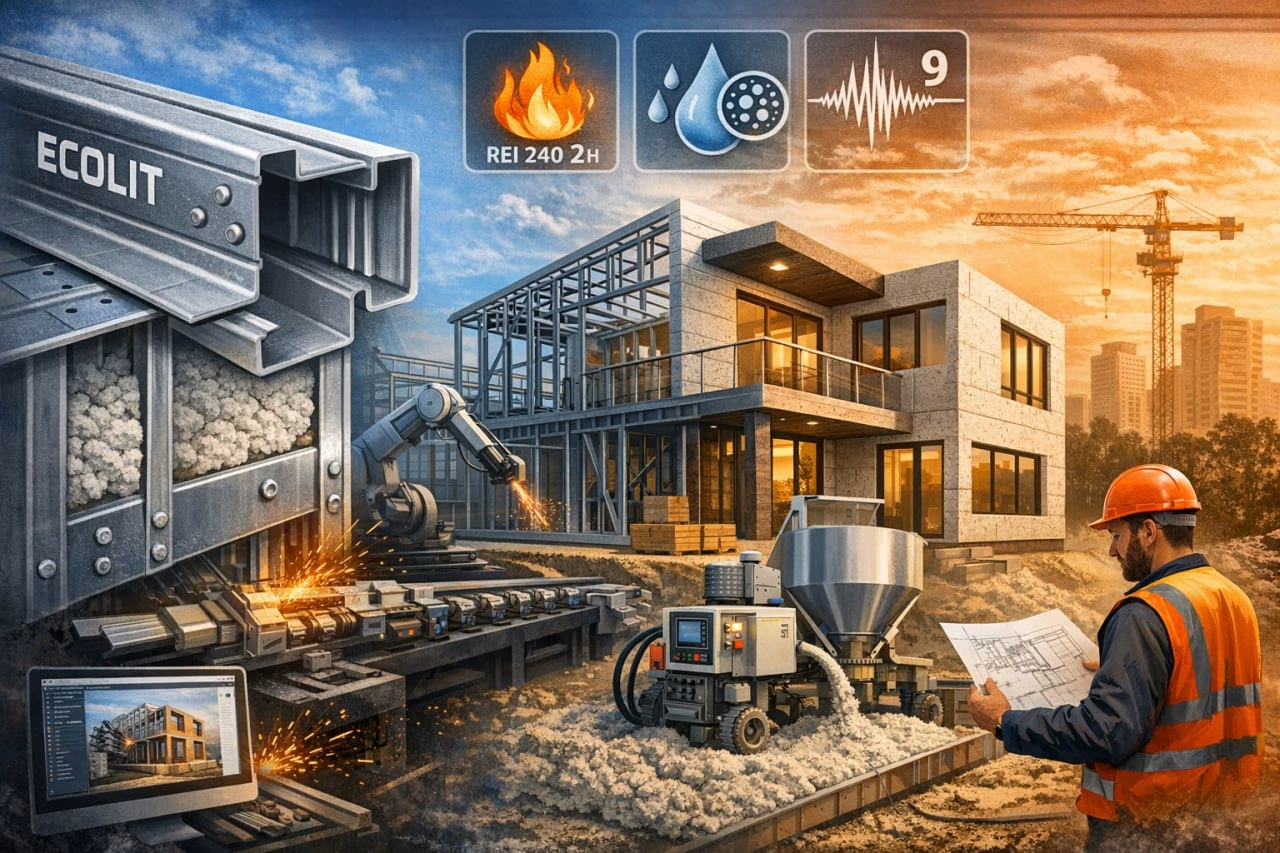
Construction has a habit of repeating itself: heavier walls, thicker layers, more “just in case.” ECOLIT flips that logic. Instead of fighting physics with mass, it uses geometry, precision manufacturing, and a tightly paired insulation-and-infill approach to make buildings that are lighter, faster to assemble, and engineered for real-world stress like earthquakes, moisture, and fire.
1) The profile that does more with less
In most building systems, the steel profile is treated like a commodity. ECOLIT treats it like a performance part.
On the ECOLIT Technologies page, the core claim is simple: the profile is unique because of its cross-section, and that cross-section is doing a lot of heavy lifting (so the building doesn’t have to).
Key design choices called out by ECOLIT:
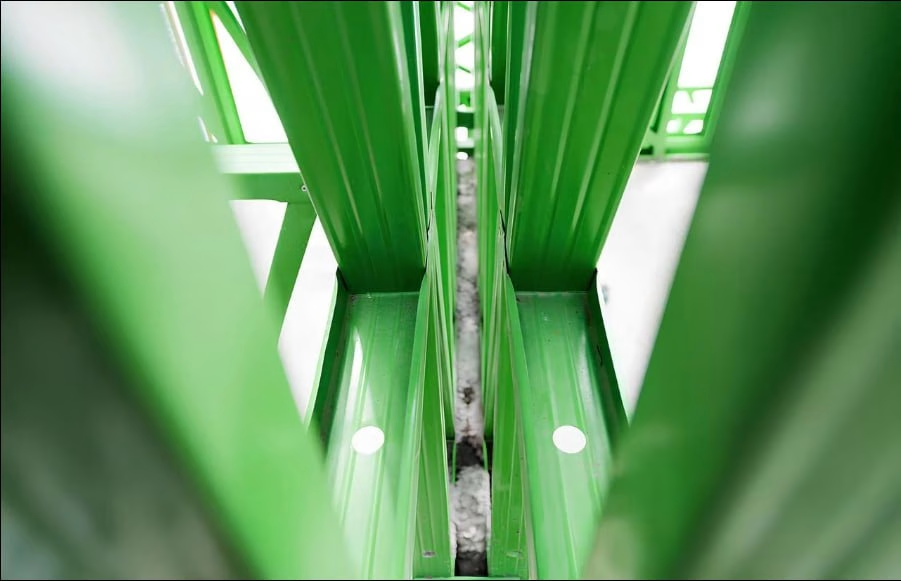
❇️ Stiffening ribs that increase strength characteristics even when thinner steel is used.
❇️ A C-shaped profile designed to improve resistance to bending at structural joints.
❇️ An enlarged flange (47 mm) that increases stiffness and helps distribute loads more evenly into sheathing materials.
❇️ High-quality steel sourced directly from the mill and galvanized steel intended to prevent rusting.
This is the “small geometry, big consequences” part of the ECOLIT story: instead of adding thickness everywhere, the system tries to be clever at the cross-section level.
2) Connections that respect the coating (and the timeline)
Steel is strong. Steel is also picky about how you treat it.
ECOLIT emphasizes punching and pre-made holes for fastening, enabling profiles to be joined without welding or self-tapping screws in certain connections, with the stated goal of preserving the metal structure and coating properties.
At the fastening level, ECOLIT highlights two approaches:
❇️Self-tapping screws for LGSF walls, described as highly resistant to bending.
❇️ A “unique fastening method,” rivets, used to connect profiles, with a note that they’re difficult to pull out or tear from the profile.
The practical effect is straightforward: fewer slow steps, fewer “hot” processes (like welding), and a connection strategy that’s meant to stay consistent across builds.
3) Precision by robotics, not guesswork on site
ECOLIT doesn’t just sell a framing idea. It also points to how that framing is produced.
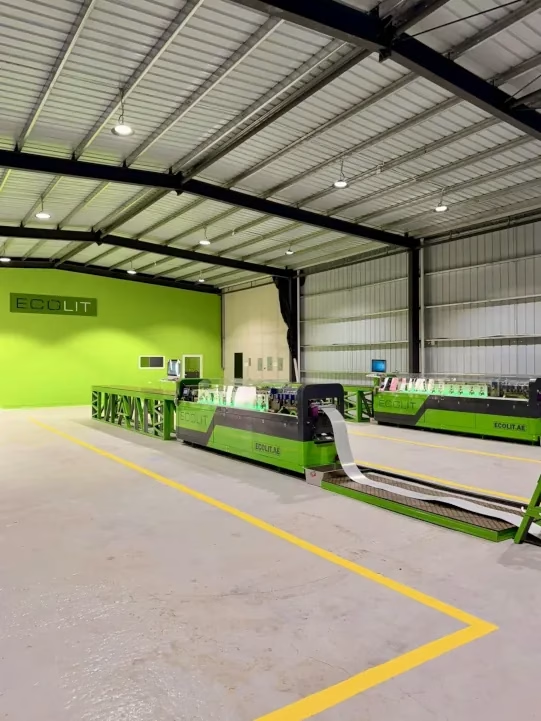
On ECOLIT’s equipment and robotics page, the company describes high-tech CNC machines (roll formers) designed for lightweight steel framing, producing profiles shaped according to BIM programs, and referencing workflows with Tekla, Robot, and Vertex software.
Two details matter here:
❇️ Perfect geometry and high precision are explicitly tied to “robotic production” on the Technologies page.
❇️ The equipment page describes integrated labeling via a high-speed printer, aimed at organized assembly and easier on-site usability.
This is where ECOLIT starts to resemble an industrial product more than a traditional construction method: design file to machine to labeled parts to assembly logic.
4) Fire, water, mold: the “boring” problems the system tries to eliminate
A building fails in boring ways: moisture creep, corrosion, mold, weak detailing, bad insulation continuity. ECOLIT’s tech messaging leans directly into those failure modes.
From the Technologies page:
❇️ Fire resistance is referenced as “REI 240” with appropriate materials, described as withstanding fire for 2 hours.
❇️ Steel is described as not absorbing moisture and not being susceptible to rotting and mold, with zinc coating and a certified dry-mix formula referenced in the same breath.
❇️ Seismic resistance up to 9 on the Richter scale is claimed and marked as confirmed by laboratory tests.
From the lightweight concrete/isolation components page: ECOLIT describes an insulation technology using a special dry-mix recipe that “does not affect the steel with corrosion” and “the walls with mold,” and claims 3-hours fire proofing plus a monolithic wall/slab effect.
Whether you’re a developer or a homeowner, these are the factors that usually drive long-term cost: what breaks first, what needs constant remediation, and what becomes a headache in inspections. ECOLIT’s narrative is that the system is designed to reduce those headaches by design, not by maintenance.

5) Modified foam concrete: monolithic feel, frame economics
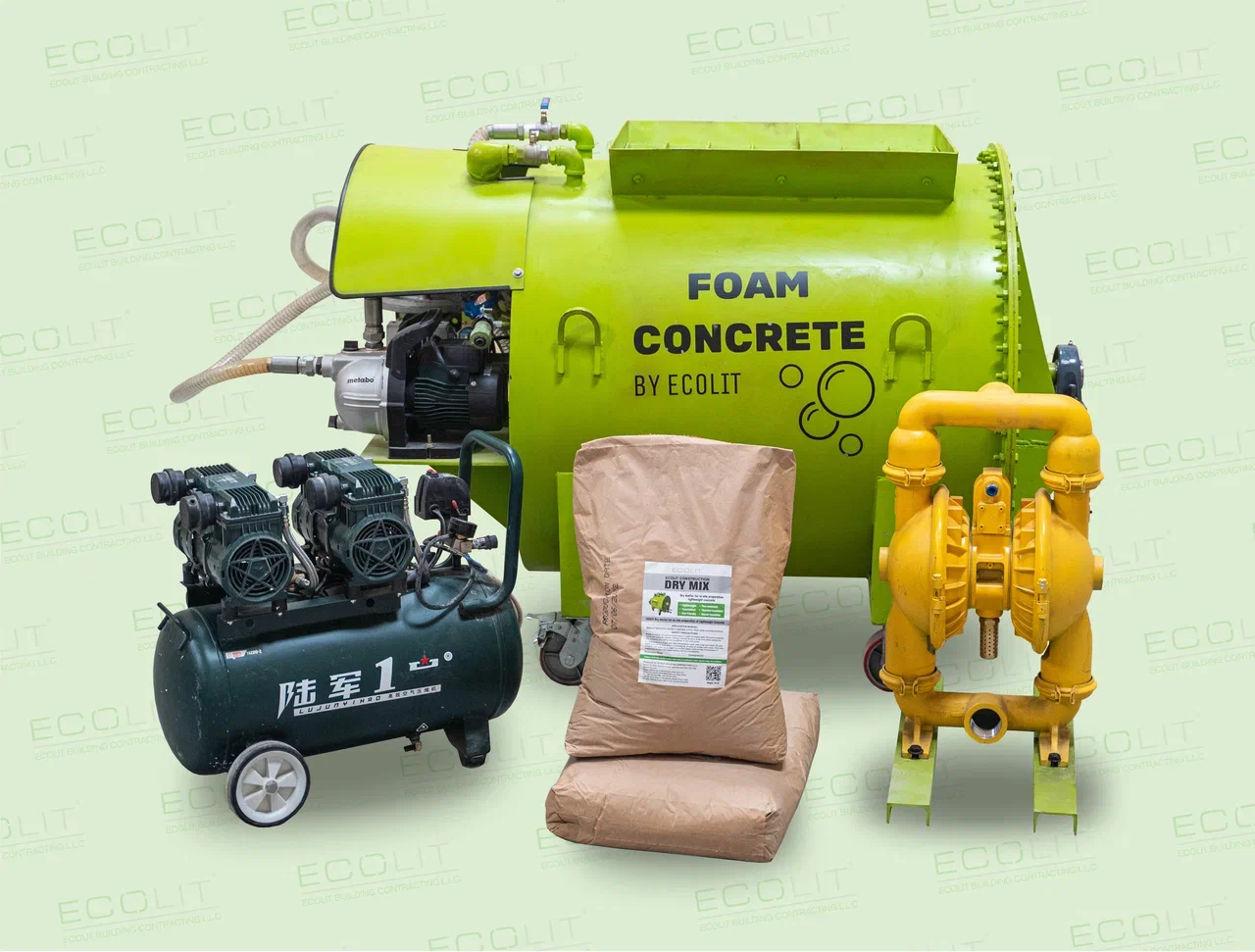
One of the most distinctive elements on the Technologies page is ECOLIT’s focus on foam concrete, described as a “modified” recipe.
ECOLIT claims it has developed its own recipe (“secret recipe,” per the page) and that it enables building “a monolithic building at the price of a frame building.”
Performance points highlighted on the same page include:
❇️ High fire resistance (up to 2 hours)
❇️ Low water absorption and thermal conductivity, framed as reducing energy costs and improving efficiency
❇️ Sound insulation over 50 dB
❇️ Resistance to mold, decay, and corrosion
And importantly, they list where it’s used:
Slabs, thermal insulation for floors/walls/roofs/attics, screeds, and backfilling.
In plain terms: the foam concrete isn’t presented as a niche add-on. It’s presented as the “second half” of the system, turning a steel skeleton into a monolithic-feeling envelope.
6) On-Site Mixing: Factory Logic, Field Flexibility
ECOLIT also describes how the foam concrete gets made where it’s needed.
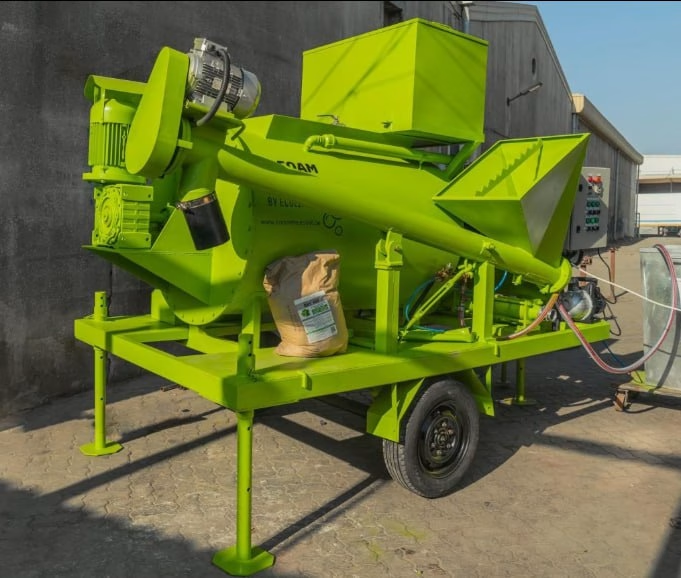
On the isolation components page, ECOLIT says its lightweight concrete machines allow mixing directly on the construction site, with:
❇️ Density ranging from 150 to 1200 kg/m³
❇️ Capacity from 2 to 15 m³ per hour
❇️ Dry-mix components packaged in “special certified bags,” requiring water and other components to reach the needed design/density.
This matters because it connects the “industrialized construction” promise to something practical: if your material can be produced on-site with controlled inputs, you reduce logistics complexity and keep the workflow predictable.

The takeaway: ECOLIT is building a repeatable construction recipe
If you zoom out, the ECOLIT technologies page is really pitching one big idea:
❇️ Repeatability beats improvisation.
❇️ A profile engineered for stiffness and sheathing compatibility.
❇️ Fasteners and joints designed for speed and coating preservation.
❇️ Robotics + BIM workflows that prioritize precision and traceable assembly.
A foam concrete solution positioned as the insulation and monolithic envelope partner to steel framing.
That combination is what makes ECOLIT feel less like “a materials supplier” and more like a construction system: one where the end result is supposed to be faster to build, easier to scale, and calmer to live in (quieter, drier, more stable).
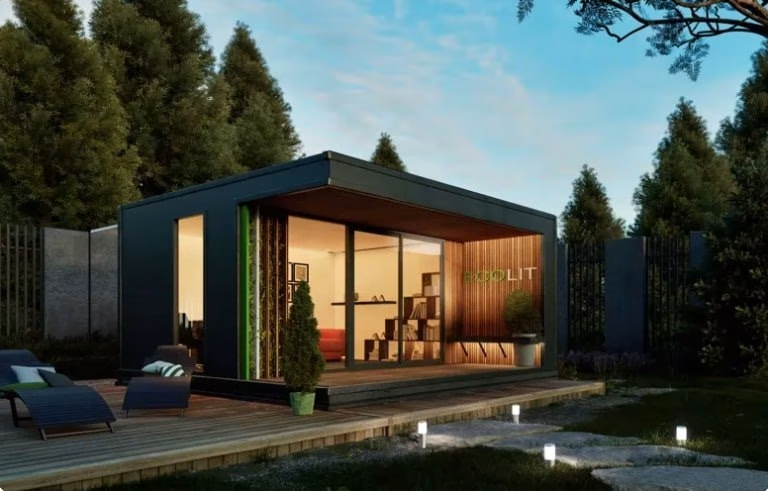
Backyards in the U.S. are changing.
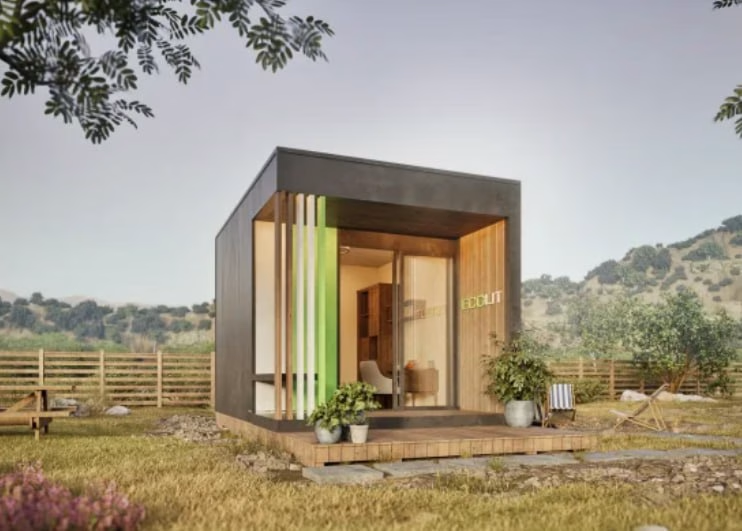
People want more space, but not another long construction project, endless permits, or months of noise. That’s why modern sheds and non-residential ADUs are becoming so popular. They’re simple, practical buildings that give you room for tools, work, storage, or hobbies — without touching your main house.
ECOLIT brings these structures to the U.S. in a modern, steel-based format that’s fast to install and, in many areas, can be built without a full permit.
What Are These Buildings, Really?
A modern shed is not the old wooden box you replace every few years. It’s a solid, well-built structure meant for real use — storing equipment, organizing tools, or setting up a small workshop.
Non-residential ADUs are slightly more flexible. People use them as home offices, studios, gyms, or utility spaces. Because they’re separate from the house, they give you privacy and functionality without remodeling or expanding your home.
In short, these buildings give you space where you actually need it.
Why So Many Homeowners Are Choosing Them
One big reason is simplicity. In many U.S. locations, smaller backyard buildings fall under size limits that allow construction without a full permit or with minimal approval. That alone saves time, stress, and money.
Another reason is speed. ECOLIT structures are prefabricated, so most of the work is done before they ever reach your yard. Installation is quick and predictable, not an open-ended project.
And then there’s durability. Steel-frame buildings don’t rot, attract pests, or suffer from moisture the way wood does. They’re built to stay in good shape for years, even in tough weather.
Built Strong, Built Smart
ECOLIT uses non-combustible, moisture-resistant materials and steel construction. That means better fire resistance, fewer maintenance issues, and a longer lifespan overall.
Steel is also recyclable, which makes these buildings a more sustainable option compared to traditional wood sheds that often end up being replaced and thrown away.
Design You Won’t Want to Hide
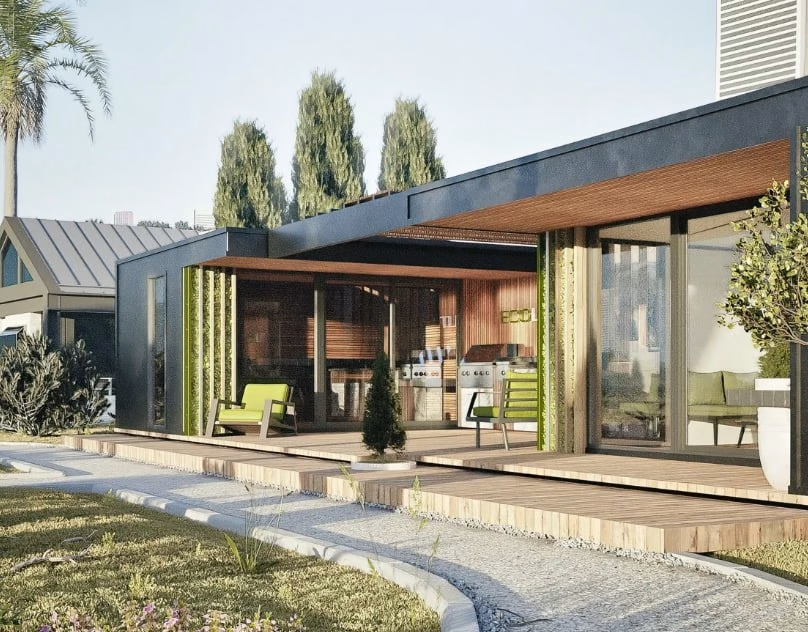
Since these buildings sit right in your backyard, looks matter. ECOLIT sheds and ADUs have clean, modern designs that blend naturally into different types of properties — city homes, suburbs, or rural areas.
They’re meant to look like a natural part of your space, not something temporary or out of place.
You can see real ECOLIT backyard projects here: 👉 yard.ecolit.us
A Simple Upgrade for Everyday Life
Whether you need storage, a quiet place to work, or just more order at home, sheds and non-residential ADUs offer a straightforward solution. No major construction, no long delays — just usable space where it’s needed.
With ECOLIT, a small building can make daily life a lot easier.

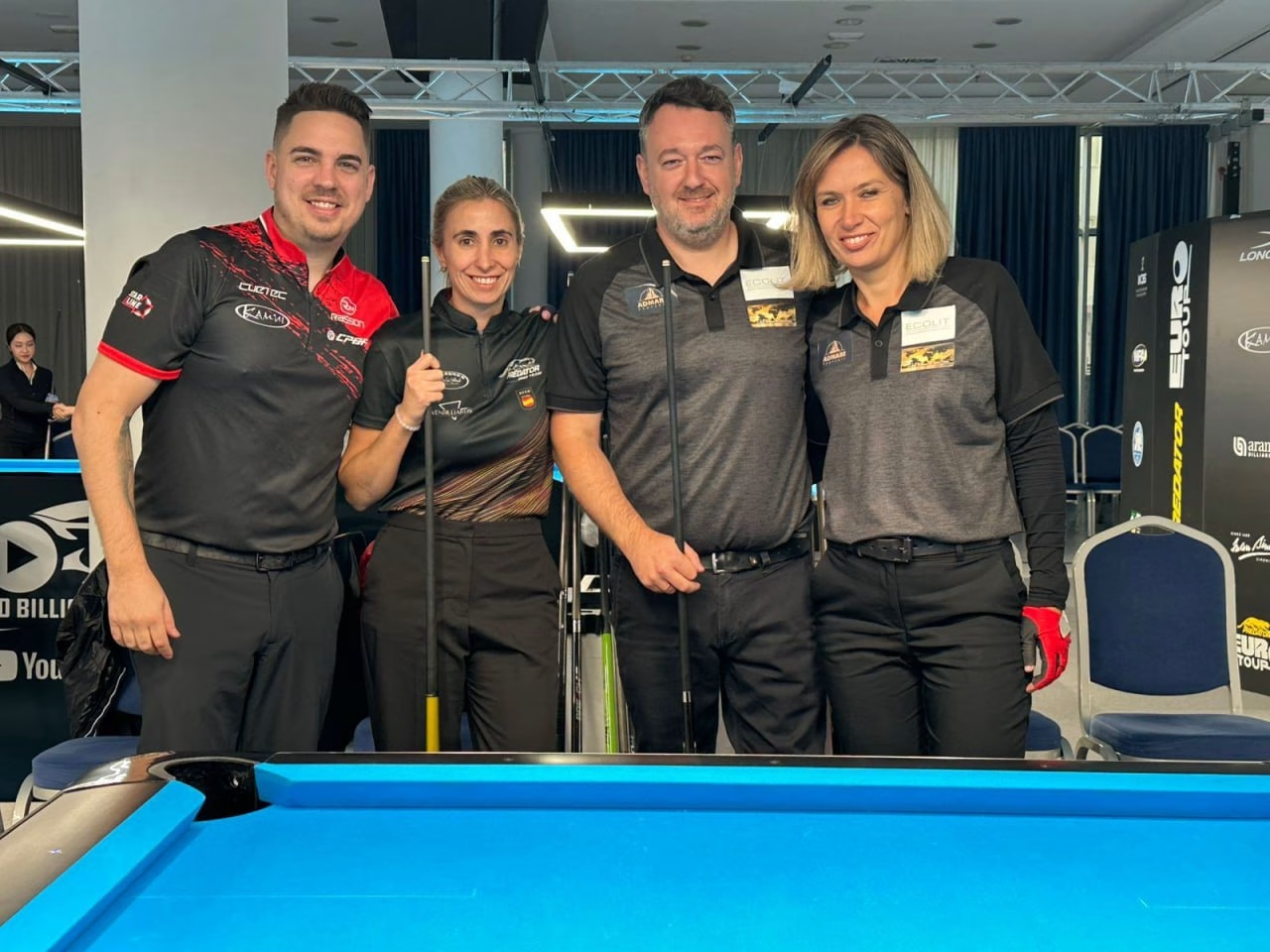
ECOLIT Cyprus is proud to announce its sponsorship of the prestigious Predator Pro Series billiards championship, supporting two outstanding athletes from Cyprus, Anthony Brabin and Anna Mazhirina, representing Billiards Lab.
The tournament gathered top players from across the world, offering a high-intensity competitive environment and a unique rule set, making the experience both challenging and rewarding for the athletes.
In their official statement, Billiards Lab expressed gratitude to the sponsors, naming ECOLIT first on the list:
“Your support gave us the chance to compete at a very high level and gain invaluable experience.
This was our first tournament with these specific rules, and it pushed us out of our comfort zone…
We’ve learned a lot and now know exactly how to prepare for upcoming events.”
At ECOLIT, we believe in empowering communities through innovation, education, and the development of local talent.
Supporting Cyprus-based athletes reflects our commitment to strengthening the island where ECOLIT is rapidly growing its presence.
We are excited to continue contributing to initiatives that promote discipline, resilience, and excellence.
ECOLIT — Building Stronger Futures.
Ever wondered how Light Gauge Steel (LGS) buildings are constructed in China?
The pace is impressive, but once you look closer, the methods raise many questions.
EPS Blocks Mixed Right on the Jobsite
Walk onto a typical Chinese LGS site and you may spot three huge piles of polystyrene beads. Why?
Because workers mix these EPS “foam balls” directly into concrete to create lightweight blocks.
But there are issues:
🟢The beads fly everywhere, the site turns into a snowstorm.
🟢Such material would never pass safety checks in the US or Europe: it’s combustible, produces toxic smoke, and requires expensive additives to stay stable.
🟢If the mixture ratios are even slightly wrong, strength drops instantly.
This is a common practice in China — but at ECOLIT we take a very different path: safe materials, predictable performance, and zero questionable shortcuts.
OSB Everywhere — Except Where It Matters Most
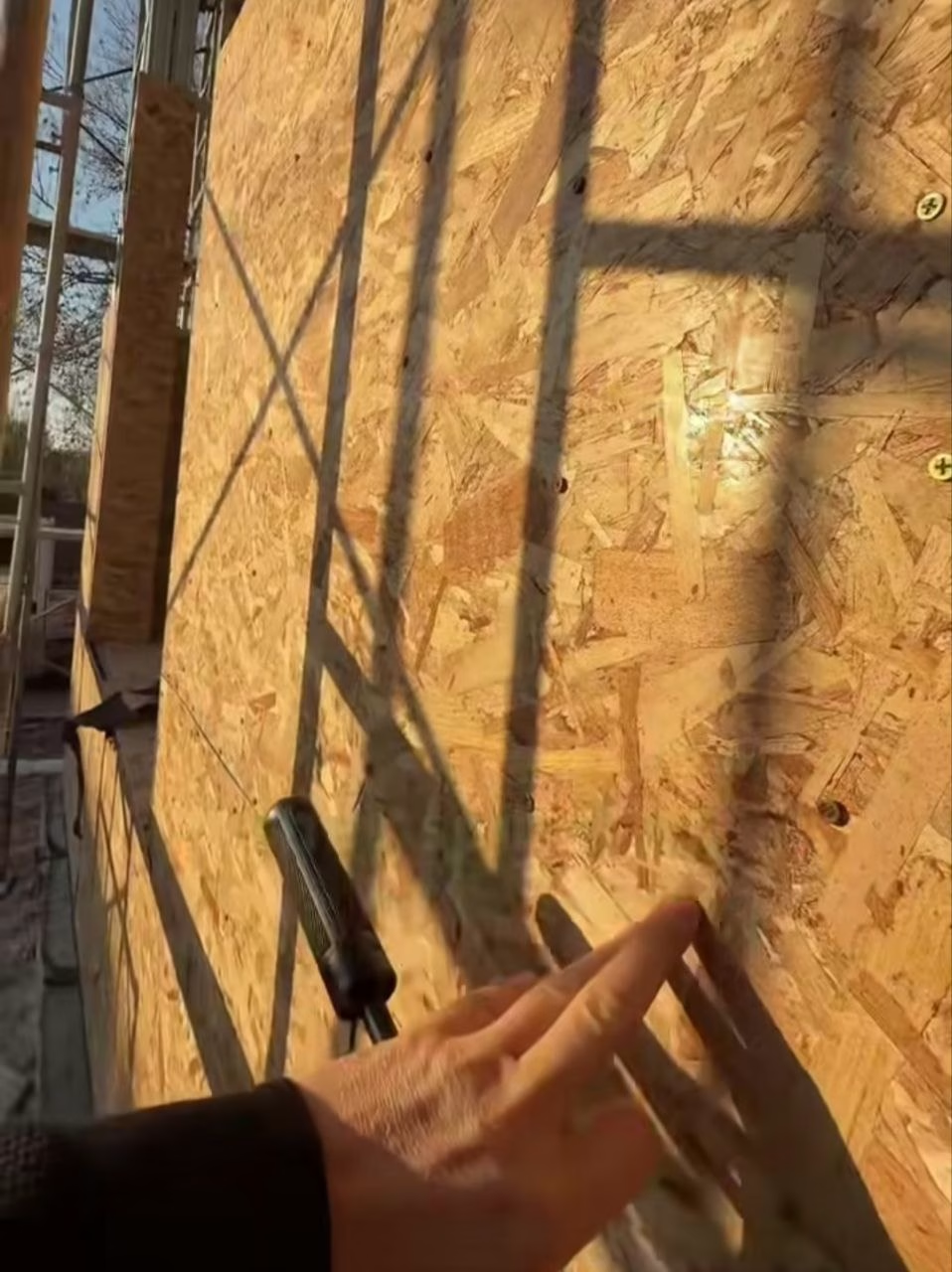
Another widespread choice is glossy OSB sheathing.
At first glance it seems fine, but OSB is essentially wood chips + glue + chemical binders. It performs poorly in:
– fire resistance,
– mold prevention,
– indoor air quality.
Fiber cement would be the better option, yet in many Chinese projects, it’s used only in bathrooms.
The rest of the house relies on OSB and EPS beads that melt and emit toxic fumes during fire.
China is incredibly advanced in steel production and automation, but finishing materials are often chosen simply because they’re cheaper — not better.
If you’re building with LGS, always look at more than just the metal. The sheathing matters just as much.
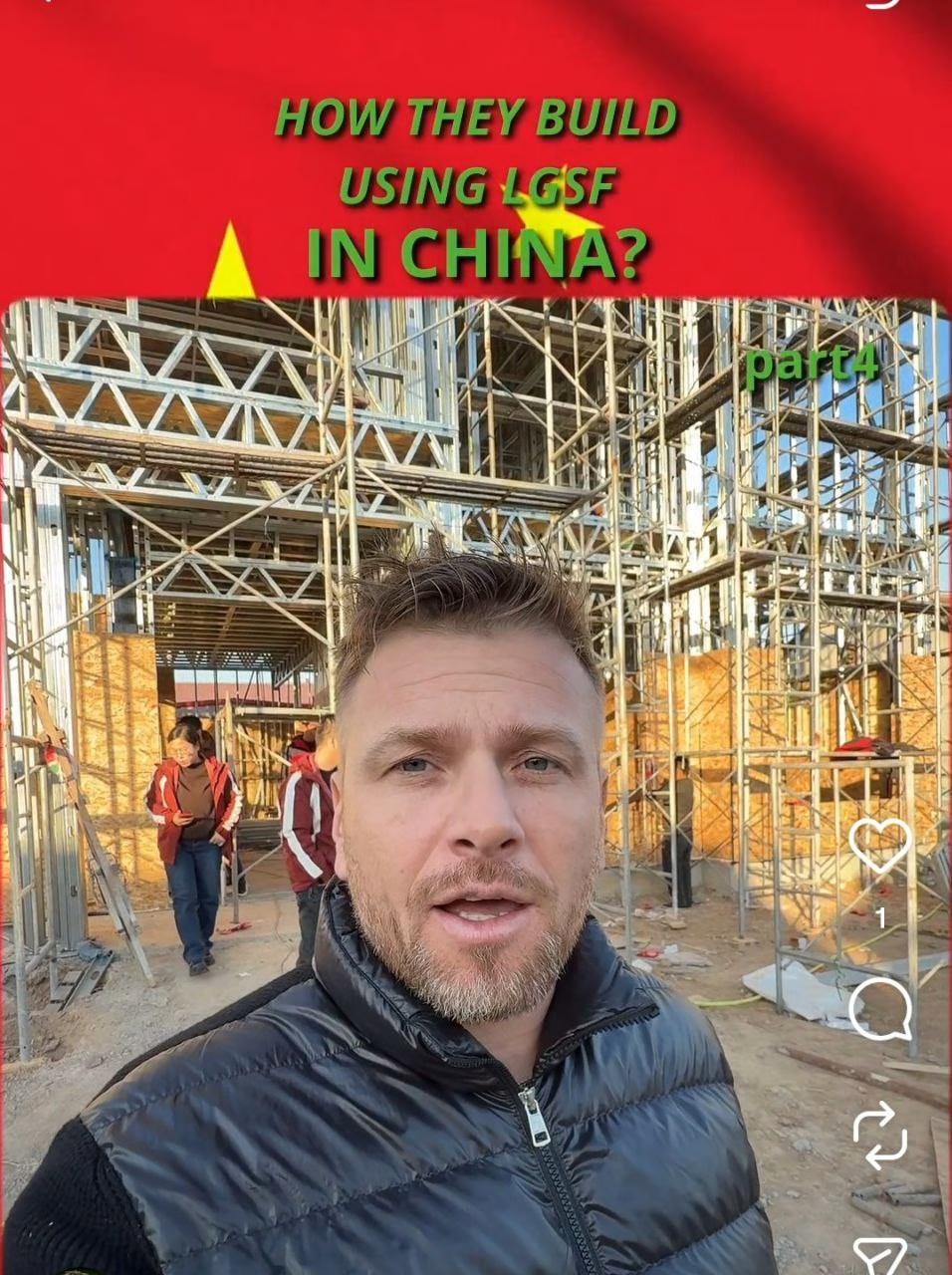
Unusual On-Site “Solutions”: The Concrete Cube Trick
Some Chinese crews use a method you won’t see anywhere else:
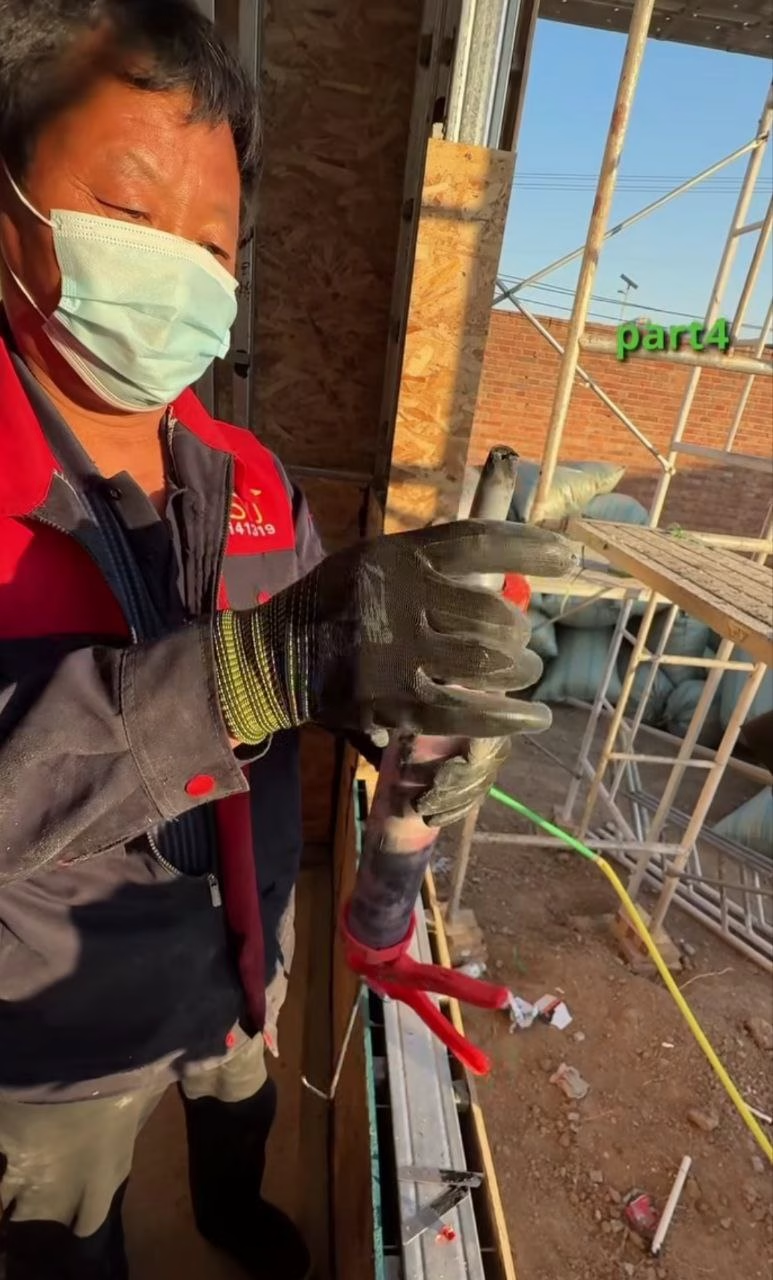
To expand the formwork and fill every cavity inside the frame, workers glue dozens of small concrete cubes directly onto the steel.
Round ones, square ones — all attached by hand with fast-curing sealant.
You can even step on them once they set.
Perhaps this technique solves a specific challenge, but at ECOLIT we avoid such “patchwork fixes.”
Our systems are designed to work cleanly, technologically, and without improvised add-ons.
Efficiency beats temporary solutions every time.
High-Speed Sealing
One thing China excels at is speed.
Every joint and every gap is sealed with a fast-curing compound that hardens almost instantly.
Workers load the gun, attach a ring nozzle, and run along the entire perimeter with impressive consistency.
Fast. Clean. Precise.
They’ve truly mastered the rhythm of repetition.
At ECOLIT, we study global construction practices — including China’s — to understand what works and what doesn’t.
Our goal is simple: bring the best technologies to our clients while eliminating risks, shortcuts, and outdated materials.
Want more behind-the-scenes insights from construction sites around the world? Stay tuned.
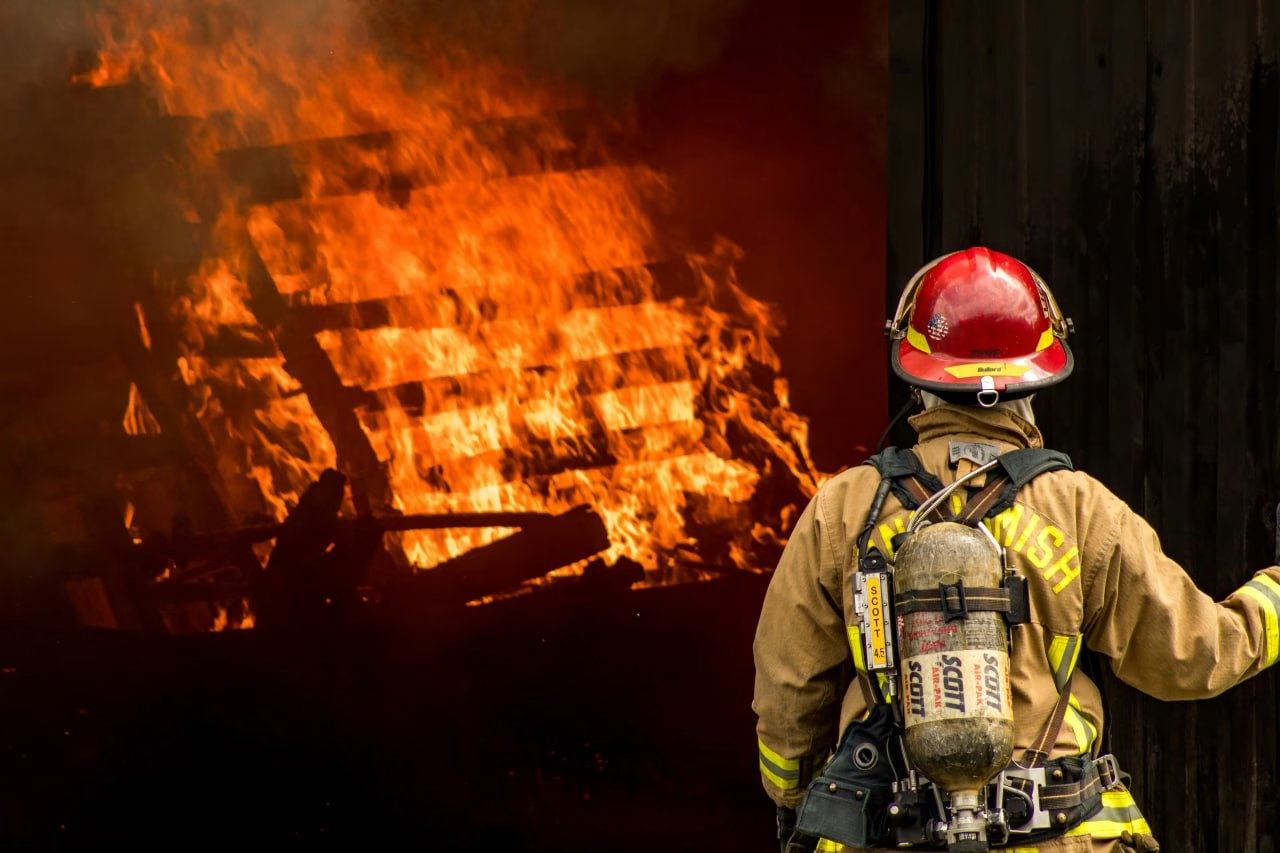
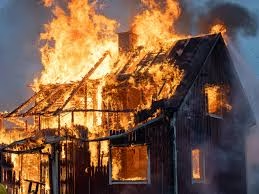
Four decades ago, the average family had up to 17 minutes to safely escape a house fire.
Today, most homes give you only 3–4 minutes.
This dramatic change is a direct result of how modern homes are built and furnished. Fire behavior has evolved because our materials have changed.
1. Modern furniture burns faster
Today’s sofas, mattresses, carpets, and insulation are packed with synthetic foams, plastics, and petroleum-based fabrics.
These materials ignite quickly and burn extremely hot, producing toxic smoke in seconds.
2. Homes are built with more combustible materials
Forty years ago, homes were often constructed from brick, concrete, and denser solid wood, which burn slowly and resist structural collapse.
Modern homes, however, rely heavily on:
Lightweight wooden frames
Engineered lumber and OSB
Thin wall assemblies
Synthetic building materials
These components are cheaper, but they fail faster in fire. Lightweight structural wood can lose its load-bearing strength in just a few minutes.
3. Open floor plans spread fire rapidly
Contemporary home layouts emphasize open spaces without doors or compartmentalization. This allows heat and smoke to move instantly throughout the house, accelerating the progression of the fire.

4. More electronics, more ignition sources
Modern homes contain dozens of electronic devices, chargers, lithium-ion batteries, and appliances that can overheat or malfunction, creating additional fire risks.
Homes today are more flammable, burn hotter, and collapse faster.
If a fire starts, you have less time than ever to get out safely.
This is why fire-resistant construction materials, such as steel framing and non-combustible ECOLIT foam concrete panels, are no longer optional. They are essential for protecting families and communities in an era where every second counts.
Every year, the United States accumulates over 12 million junk cars. Most people assume these vehicles get recycled domestically. In reality, a surprising amount of scrap metal is shipped overseas — mainly to China — where it’s melted down, turned into steel, and later sold back to the U.S. as finished products.
It’s a strange and wasteful loop:
American cars → exported as scrap → processed abroad → imported again as metal.
This system carries obvious problems — high emissions, lost economic value, and dependence on foreign recycling. And while millions of tons of steel leave the country, the U.S. struggles with an affordable housing shortage and rising climate-related risks.
ECOLIT is trying to change this picture.
Instead of exporting the waste, ECOLIT proposes keeping it in the country and turning it into something people truly need: disaster-resistant homes.
The company’s engineering team found that steel from three end-of-life vehicles is enough to produce one complete structural frame for an ECOLIT home kit. Their system combines cold-formed steel (CFS) with fire-safe foam-concrete panels — materials that outperform traditional wood in durability, fire resistance, moisture protection, and hurricane performance.
In other words, junk cars become high-value housing, not low-value scrap.
Why this approach works?
By recycling domestically instead of exporting, the ECOLIT model:
✅ reduces transportation emissions,
✅ saves money on raw steel,
✅ supports local manufacturing,
✅ brings construction materials directly to communities that need them.
The contrast is especially striking in major cities. For example, New York collected roughly 100,000 junk vehicles in the past two years — while more than 100,000 residents lack stable housing. It’s a missed opportunity hiding in plain sight.
Stronger Homes, Stronger Communities
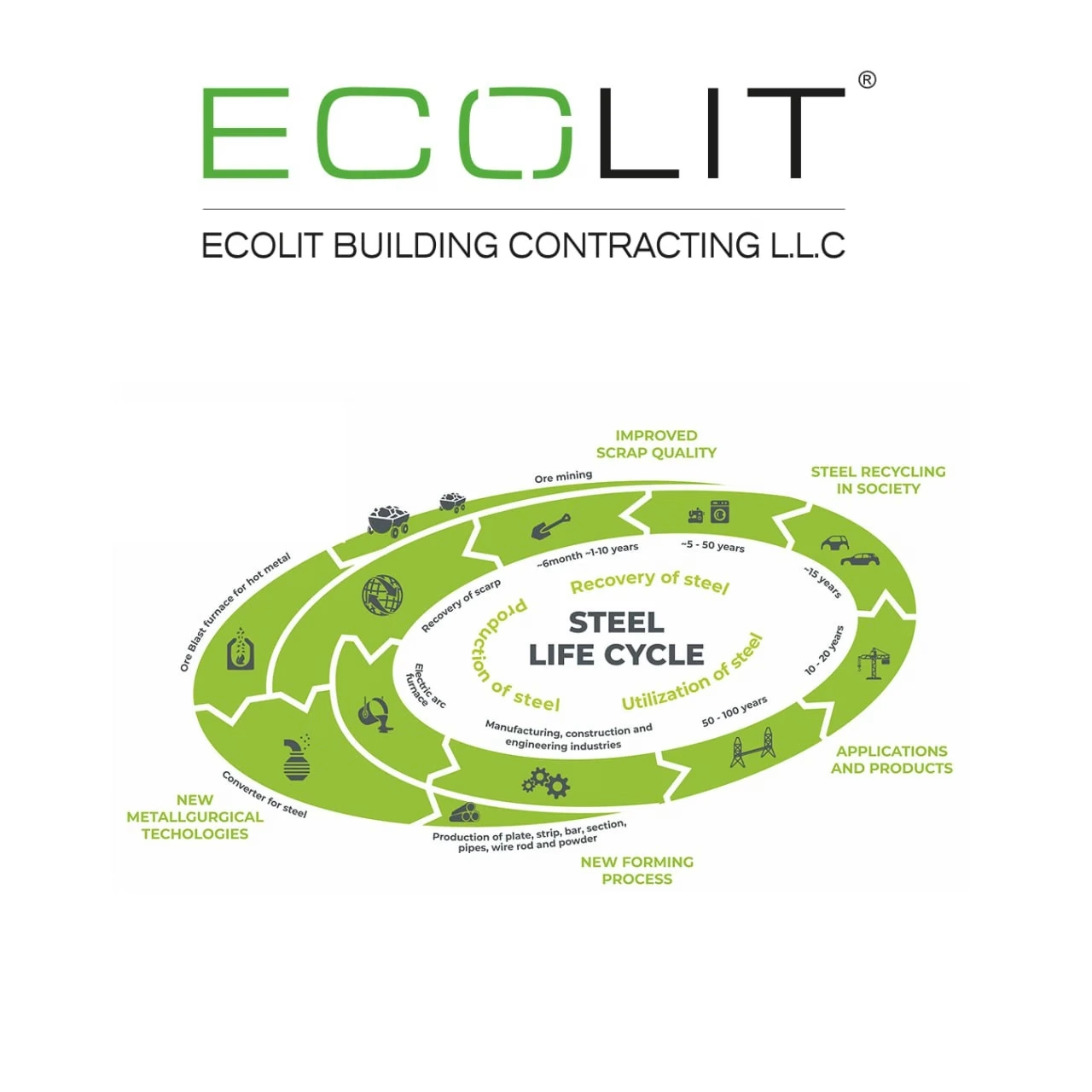

ECOLIT’s panels have been tested internationally, withstanding temperatures up to 2000°C and staying stable after hours of direct fire exposure. The lightweight steel frames also perform well against hurricanes and earthquakes, offering significantly higher safety margins than wood construction.
Recycled steel doesn’t diminish performance. Once processed, it becomes identical to new material — but with a much smaller environmental footprint.
Closing the loop at home
The U.S.–China scrap cycle belongs to the past. ECOLIT’s initiative suggests a far simpler loop:
retired cars → recycled steel → ECOLIT frames → affordable homes.
It’s local, sustainable, and aligned with real community needs. Instead of exporting a problem, ECOLIT turns it into a solution — and a strong one.

ECOLIT is undergoing a series of tests in Texas, where our structures are being evaluated for wind loads and seismic resistance. This is an important stage in obtaining certifications that confirm the strength and safety of our technology even under extreme weather conditions.
The next challenge — hurricane certification.
Our engineers are confident that Cold-Formed Steel (CFS) structures can withstand hurricane-force winds just as they have proven their strength in earthquakes.
A few months ago in San Diego, a 10-story building made of Cold-Formed Steel Structures was tested on the world’s largest seismic simulation platform. The building was subjected to extreme conditions — including simulated structural collapses, fire protection failure, pipe bursts, and electrical short circuits.
The result impressed experts worldwide: the structure not only endured the test but demonstrated enough reserve strength to support an additional 2–5 floors on top.
These are the very technologies ECOLIT builds upon. By using CFS/LGSF systems proven under real disaster scenarios, we create buildings that combine lightness, durability, and seismic resistance up to magnitude 9.
Building strong means building with ECOLIT steel.