

ECOLIT Technology: when steel becomes a system
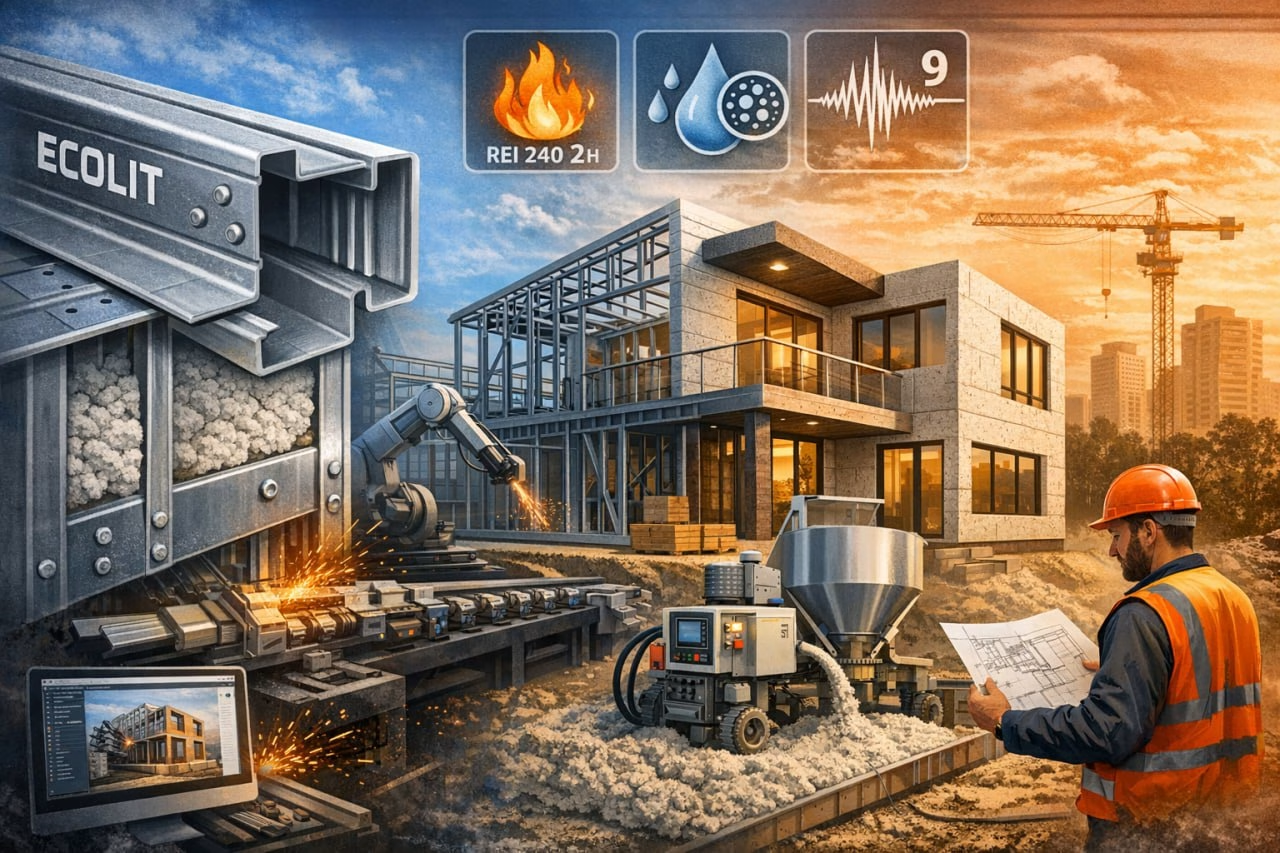
Construction has a habit of repeating itself: heavier walls, thicker layers, more “just in case.” ECOLIT flips that logic. Instead of fighting physics with mass, it uses geometry, precision manufacturing, and a tightly paired insulation-and-infill approach to make buildings that are lighter, faster to assemble, and engineered for real-world stress like earthquakes, moisture, and fire.
1) The profile that does more with less
In most building systems, the steel profile is treated like a commodity. ECOLIT treats it like a performance part.
On the ECOLIT Technologies page, the core claim is simple: the profile is unique because of its cross-section, and that cross-section is doing a lot of heavy lifting (so the building doesn’t have to).
Key design choices called out by ECOLIT:
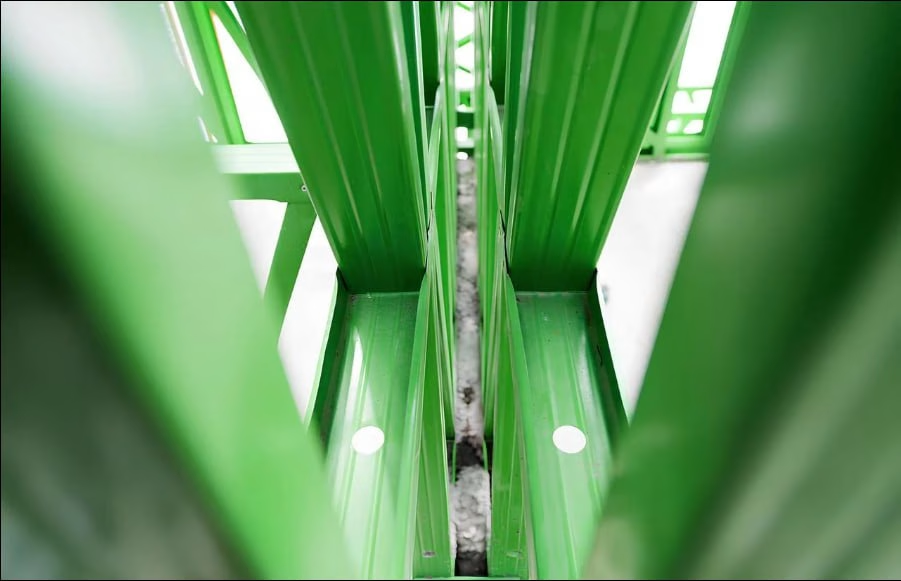
❇️ Stiffening ribs that increase strength characteristics even when thinner steel is used.
❇️ A C-shaped profile designed to improve resistance to bending at structural joints.
❇️ An enlarged flange (47 mm) that increases stiffness and helps distribute loads more evenly into sheathing materials.
❇️ High-quality steel sourced directly from the mill and galvanized steel intended to prevent rusting.
This is the “small geometry, big consequences” part of the ECOLIT story: instead of adding thickness everywhere, the system tries to be clever at the cross-section level.
2) Connections that respect the coating (and the timeline)
Steel is strong. Steel is also picky about how you treat it.
ECOLIT emphasizes punching and pre-made holes for fastening, enabling profiles to be joined without welding or self-tapping screws in certain connections, with the stated goal of preserving the metal structure and coating properties.
At the fastening level, ECOLIT highlights two approaches:
❇️Self-tapping screws for LGSF walls, described as highly resistant to bending.
❇️ A “unique fastening method,” rivets, used to connect profiles, with a note that they’re difficult to pull out or tear from the profile.
The practical effect is straightforward: fewer slow steps, fewer “hot” processes (like welding), and a connection strategy that’s meant to stay consistent across builds.
3) Precision by robotics, not guesswork on site
ECOLIT doesn’t just sell a framing idea. It also points to how that framing is produced.
On ECOLIT’s equipment and robotics page, the company describes high-tech CNC machines (roll formers) designed for lightweight steel framing, producing profiles shaped according to BIM programs, and referencing workflows with Tekla, Robot, and Vertex software.
Two details matter here:
❇️ Perfect geometry and high precision are explicitly tied to “robotic production” on the Technologies page.
❇️ The equipment page describes integrated labeling via a high-speed printer, aimed at organized assembly and easier on-site usability.
This is where ECOLIT starts to resemble an industrial product more than a traditional construction method: design file to machine to labeled parts to assembly logic.
4) Fire, water, mold: the “boring” problems the system tries to eliminate
A building fails in boring ways: moisture creep, corrosion, mold, weak detailing, bad insulation continuity. ECOLIT’s tech messaging leans directly into those failure modes.
From the Technologies page:
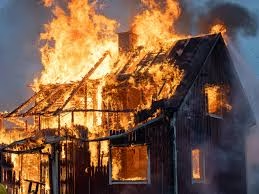
❇️ Fire resistance is referenced as “REI 240” with appropriate materials, described as withstanding fire for 2 hours.
❇️ Steel is described as not absorbing moisture and not being susceptible to rotting and mold, with zinc coating and a certified dry-mix formula referenced in the same breath.
❇️ Seismic resistance up to 9 on the Richter scale is claimed and marked as confirmed by laboratory tests.
From the lightweight concrete/isolation components page: ECOLIT describes an insulation technology using a special dry-mix recipe that “does not affect the steel with corrosion” and “the walls with mold,” and claims 3-hours fire proofing plus a monolithic wall/slab effect.
Whether you’re a developer or a homeowner, these are the factors that usually drive long-term cost: what breaks first, what needs constant remediation, and what becomes a headache in inspections. ECOLIT’s narrative is that the system is designed to reduce those headaches by design, not by maintenance.

5) Modified foam concrete: monolithic feel, frame economics
One of the most distinctive elements on the Technologies page is ECOLIT’s focus on foam concrete, described as a “modified” recipe.
ECOLIT claims it has developed its own recipe (“secret recipe,” per the page) and that it enables building “a monolithic building at the price of a frame building.”
Performance points highlighted on the same page include:
❇️ High fire resistance (up to 2 hours)
❇️ Low water absorption and thermal conductivity, framed as reducing energy costs and improving efficiency
❇️ Sound insulation over 50 dB
❇️ Resistance to mold, decay, and corrosion
And importantly, they list where it’s used:
Slabs, thermal insulation for floors/walls/roofs/attics, screeds, and backfilling.
In plain terms: the foam concrete isn’t presented as a niche add-on. It’s presented as the “second half” of the system, turning a steel skeleton into a monolithic-feeling envelope.
6) On-Site Mixing: Factory Logic, Field Flexibility
ECOLIT also describes how the foam concrete gets made where it’s needed.
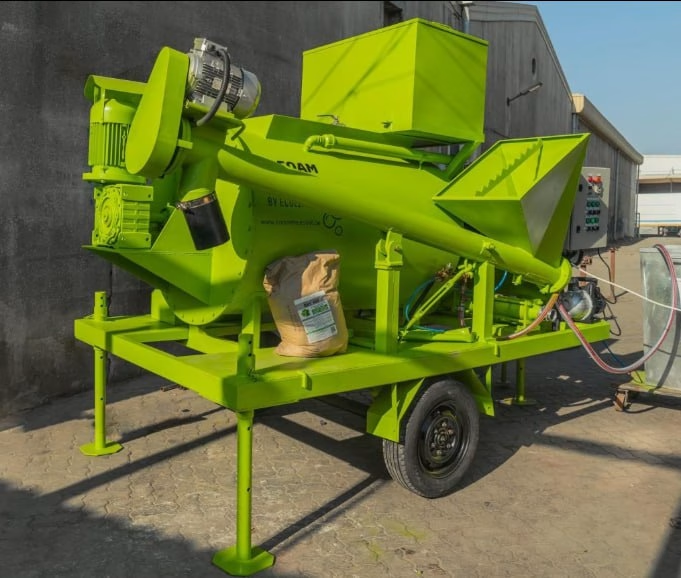
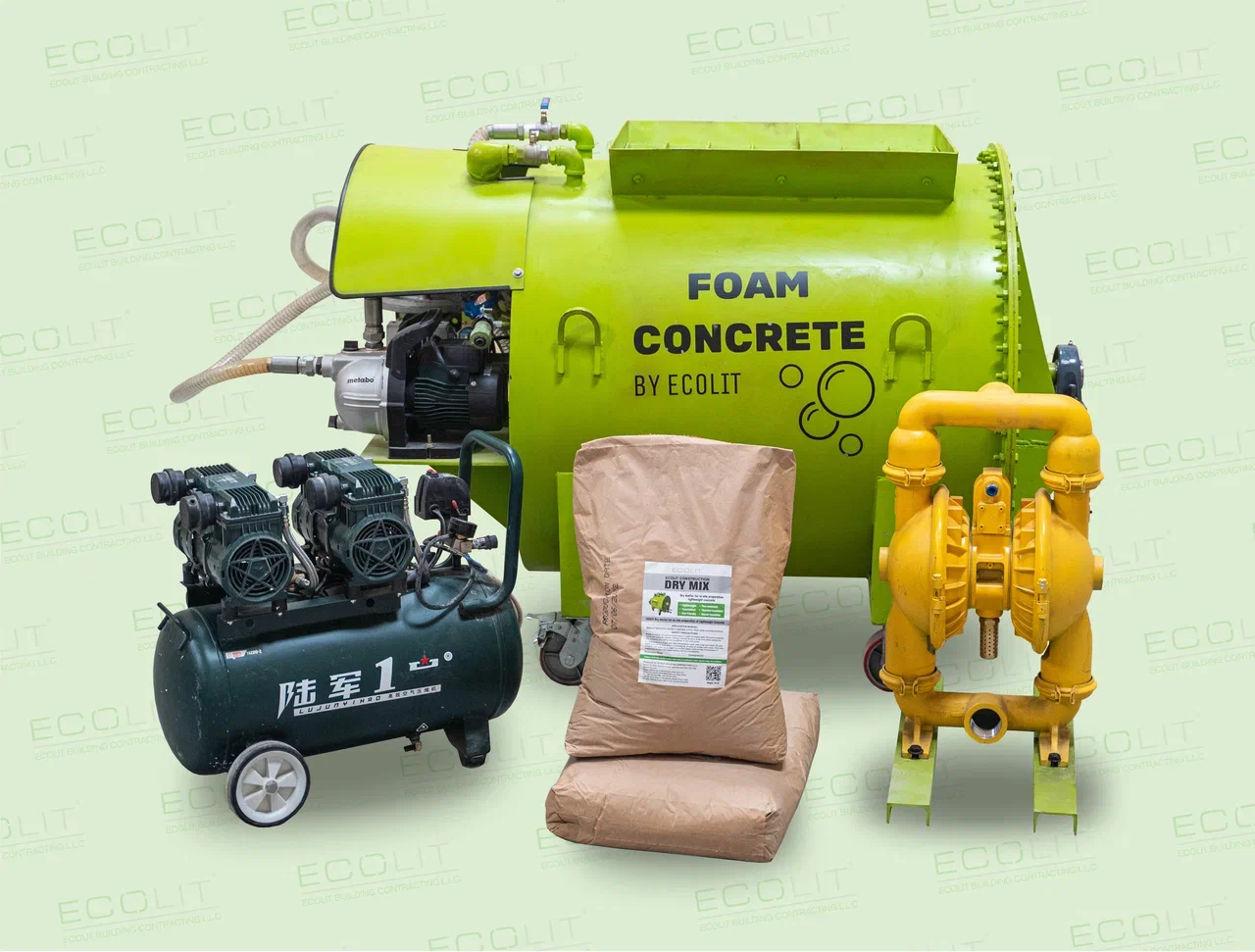
On the isolation components page, ECOLIT says its lightweight concrete machines allow mixing directly on the construction site, with:
❇️ Density ranging from 150 to 1200 kg/m³
❇️ Capacity from 2 to 15 m³ per hour
❇️ Dry-mix components packaged in “special certified bags,” requiring water and other components to reach the needed design/density.
This matters because it connects the “industrialized construction” promise to something practical: if your material can be produced on-site with controlled inputs, you reduce logistics complexity and keep the workflow predictable.

The takeaway: ECOLIT is building a repeatable construction recipe
If you zoom out, the ECOLIT technologies page is really pitching one big idea:
❇️ Repeatability beats improvisation.
❇️ A profile engineered for stiffness and sheathing compatibility.
❇️ Fasteners and joints designed for speed and coating preservation.
❇️ Robotics + BIM workflows that prioritize precision and traceable assembly.
A foam concrete solution positioned as the insulation and monolithic envelope partner to steel framing.
That combination is what makes ECOLIT feel less like “a materials supplier” and more like a construction system: one where the end result is supposed to be faster to build, easier to scale, and calmer to live in (quieter, drier, more stable).